Tag Archives: Pat Nolan

Limited Edition: Untouched By Rain

Untouched By Rain

A Tanka Sequence

by Pat Nolan 

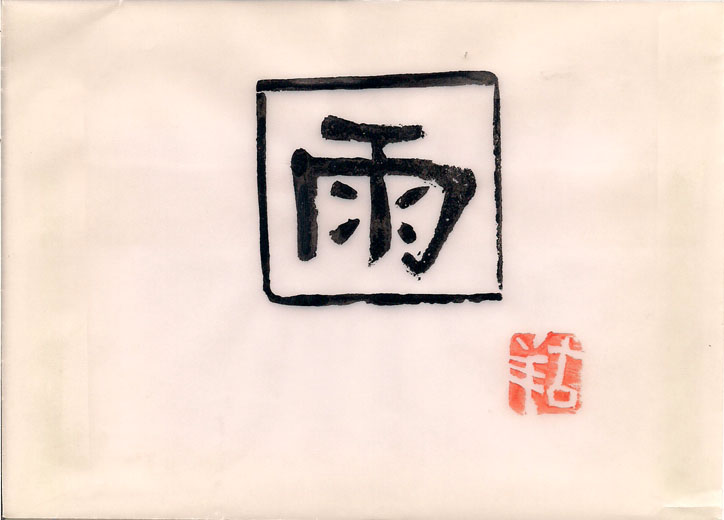
ubrfcvrUntouched By Rain was published in 2005 by Empty Head Press in a limited edition, lettered A through Z, signed by the author and bearing his seal, “old goat.” Each hand-made book has a unique cover, many as reproductions of  uchiwa-e, Japanese fan prints, features silk screened Japanese end papers, and is hand sewn in the Japanese four-hole side stitch binding.  The black & white illustrations accompanying the tanka represent traditional Japanese motifs such as the cherry blossom, crane, bamboo, and pine. Untouched By Rain, and a companion selection of tanka, Thin Wings, were originally made to be sold through the gift shop at the Sonoma County Museum.  Up until the gallery’s recent closing, both tanka selections were also offered through The Quicksilver Mine Company.  Less than a handful of copies of Untouched By Rain are still available.  Inquiries welcome.

presentation envelope

Click to view a pdf facsimile of Untouched By Rain 2005

Tanka, meaning ‘short song,’ is an unrhymed poem with a fixed thirty-one syllable pattern of 5-7-5-7-7.  In Westernized stanza form, it is a five line poem.   Tanka, one of the oldest of Japanese verse forms, dates back to before the 11th Century.  Tanka gained renewed popularity in the late 19th Century among radically modern young poets who brought its diction and subject matter up to date.  Historically, tanka is a precursor to renga, haikai, and haiku.  The poems in Untouched By Rain do not follow precisely the fixed syllabic count nor do they conform to many of the accepted tanka conventions but seek a synthesis and accommodation brought about by translation into a radically different language and culture. 

DICK LIT: Q&A with Pat Nolan

warning uspoet
Q: You’re known primarily for your poetry, why are you now writing fiction?

A:  Actually when I first thought to write, I wanted to write fiction.  Novels, short stories.

Q:  What turned you to poetry?

A:  A wider experience of reading, other than the best sellers on the paperback racks at the corner drug store and the science fiction shelf at the local library.  I came to reading late but once I did I was a voracious reader. By the time I graduated from high school I knew there was more to reading than just pop fiction.

Q:  Wasn’t your reading guided by what you were taught in the classroom?

A:  I was an indifferent student.  Most of my reading centered around what I discovered for myself.  While in the Navy I was lucky to have shipmates who were quite literate.  Everyone in my rating read. A couple of guys even had some college under their belts.  Paperbacks were a regular item of exchange, mostly westerns, crime fiction, smut.  Lady Chatterley’s Lover made the rounds.  For obvious reasons. And Miller’s Tropics.  I was into Kerouac then, and always on the lookout for more by him.  Someone suggested that I check out a bookstore in San Diego where my ship was stationed.  I’d never been to a bookstore before, a real bookstore that wasn’t a news stand or the book section in a department store.

Q:  I find that shocking.  How old were you then?

A:  Oh, eighteen, nineteen.  And I think I was a little intimidated by the place.  It was a small store front on a side street crammed to the rafters with books.  I’d never seen so many books outside of a library.  Anyway, I asked after any new Kerouac titles but they only had ones I’d already read.  The clerk showed me a book by someone he said was a friend of Kerouac’s.  It was A Coney Island Of The Mind by Lawrence Ferlinghetti.  Poetry.  I think I bought it just so I could get out of there and not feel like a complete idiot.

Q:  Did you start writing poetry then?

A:  Not really.  I mean, I’d already tried my hand at writing poems so I had a notion of what a poem was, a conventional Romantic notion, and it had to do with expressing emotions toward a loved one, usually an indifferent unresponsive young woman.  They were all very ardent.  No one ever saw them.  I wasn’t very serious about it, anyway.

Q:  You must have become serious eventually.

A:  Yes, eventually.  One thing leads to another.  I started including poetry in my reading .  I can’t say I got all that was going on.  It wasn’t like reading popular fiction.  But it was interesting, challenging.  I came across Don Allen’s New American Poetry.  That was a revelation.  And I started noting references to names of other poets and writers.  Baudelaire, Rimbaud, Pound, Williams.  So I began looking into those guys, and they led me to other writers and poets.  At one point all my reading was taken up with tracking down a wider variety of writers and finding out more about them, their writing.

Q:  Were you also writing poetry at this time?

A:  That kind of went hand in hand with my reading.  In order to understand what the poets were doing I had to try to replicate what they were doing in a kind of reverse engineering.  It’s not as easy as it sounds.  I was concentrating on contemporary American poets for the most part, and it was pretty much anything goes, or that’s what it seemed like.  Looking back, I can see that I was really just pissing in the wind.

Q:  Yet you were published in some pretty impressive magazines.  Rolling Stone, The Paris Review, Exquisite Corpse.  And in a number of anthologies.  Don’t you think you were doing something right?

A:  Well, thanks to the kindness of strangers and the indulgence of friends. Not without some trepidation on my part, I have to say.  Success tends to complicate things.

Q:  So after many years you’ve turned back to fiction.  Why?

A:  I never turned away from fiction.  It’s just that the learning curve with poetry is steeper and requires greater diligence.  Around the same time that I had my first book published and was invited to read at the Poetry Project in New York City, I had also written two novels, one of which remained in draft form, and the other as a final manuscript. That was the first version of the western.  Even though I was experiencing relative success as a poet, writing novels was never out as an option.  And novels are a different kind of challenge.  Physically, logistically, especially back when everything was written on a typewriter.  Large chunks of specific time are required.  I feel like I could probably write poetry on the run, but the writing of a novel, for me at least, requires consistency, more sit down time.  And back then, a lot of white out, scissors, glue.  The construction of a final draft was an engineering feat.   Sorting through the renumbered pages with whole blocks of writing crossed out and painstakingly stitching it all back together.  Just the thought of it makes me shudder.

Q: What became of those early novels?

A:  The western made the rounds of agents and publishers but no one was interested.  Thankfully.  And the first draft novel was recycled into a general idea for a story.  I kept the title and the locale.

Q:  One of your recently published novels, On The Road To Las Cruces, is a western.  Is this the same novel?

A:  It’s the same subject, but the narrative has changed considerably.  Even though I had put it aside, the story and the need to tell it stayed with me, and I would go back and rewrite parts or scribble in the margins my additions or redirections.  That went on for several years and finally computers caught up with me and I spent many hours transcribing my typewritten poetry manuscripts as computer documents.  I also transcribed my western which allowed me to incorporate some of the revisions I had arrived at.  And in the process of transcribing, I also rewrote.

Q:  Technology benefitted your processes, in other words.

A:  Technology always changes the way you do business.  Writing a novel is no different.  And as an added advantage, word processors allow, among other things, cut and paste techniques at one time available only to film editors.

Q:  Are you utilizing those tools the way they are in the cinema?

A:  In a way, yes, because cinema is a popular story telling art that uses narrative in interesting, innovative ways.  In doing so, certain idioms are coined, clichés generated.  Telling the story on the page can utilize these idioms, techniques, in similar ways since the reading audience and movie goers overlap and recognize the tropes.  I was particularly conscious of using cinematic techniques in the western, mainly because of the complexity of trying to tell the story on three different levels.  There’s the narrative that takes place in real time, the one that takes place in the recent past, and the narrative that’s as a result of introspection and  dialogue with a ghost.

Q:  Did you also use cinematic techniques in the novel you published last year, The Last Resort?

A:  The narrative in The Last Resort has a fairly straight forward first person camera eye chronology with an extended back story flash back that serves as the booster rocket into the wrap up.  There’s also the  cinematic technique of the cliffhanger, the Saturday matinee movie serial.  The chapters, which for the most part are all roughly the same length, end abruptly or as jump cuts.

Q:  You’ve subtitled the novel A Lee Malone Adventure

A:  Lee Malone is based on a character I created for a serial I wrote for a local weekly newspaper years ago about a supermodel sleuth.  I had started some preliminary chapters for another serial when the editorship changed hands and the newspaper was no longer interested in the material. These odds and ends of fiction were among the last to be transcribed as computer documents, and I didn’t pay that much attention to them until some years after that when I read a couple chapters to a few writers I know.  Their reaction told me that I might be on to something.  So I pursued it.

Q:  Your first person narrator is a woman.  Why a woman, and who is she?

A:  Lee Malone is a stereotypical beautiful woman, former international model circa 1985.  What makes her interesting is how she tries to circumvent that cliché and become an authentic person .  In the very limited realm of a not overly realistic genre storyline, of course.  The  protagonist for these kinds of escapades is usually a tough guy with a broken nose, a five o’clock shadow, and breath that can pickle squid.  I was after something different.

Q:  The Last Resort was published in 2012.  Why is the setting in 1985?  Why not a more contemporaneous time?

A:  I had started the early chapters in 1985.  And rather than go back and retool the time frame to something more current, I decided to stick with it and avoid as many anachronisms as possible.  No cell phones or internet back then so that allowed a slower unfolding of the plot and a more leisurely development of the back story on Lee Malone.

Q:  You portray Lee Malone as rather willful.

A:  She has a cocksureness instilled by her life of privilege as a beauty.  And she knows how to use her looks to get what she wants.  But there’s a down side, and that is that all men lust after her and most women hate her.  Her aloofness is also a tragic flaw.  Men are cowed by her imperiousness and women suspect her of treachery.  Consequently she is alone.

Q:  You’ve published two genre novels, one a western and the other a pot boiler.  Are you seeking a conventional audience as opposed to one that was primarily interested in your poetry?

A:  The interest in my poetry in a very qualified sense has always been limited.  I don’t expect that my novels will be read by many more people, conventional or otherwise.  Given that the novels are written by a poet, conventionality was never a consideration.  Other than to label them genre works. Also this imagined audience will undoubtedly encompass many who have read my poems. Anyway, the idea of an audience for my work is always problematic.  I don’t think that my subject matter and how I approach it has universal appeal.  What I write about and how I write might find more support among men than woman.   The western is about gun violence, and the pot boiler, as you characterize it, is about titillation.  These are two things that fascinate men, sex and death.

Q:  Are there more macho centric gender specific novels in your future?

A:  I’m currently working on two crime fiction novels and a series of short stories in the same genre.  They’re detective stories, dick lit, if you will. Dick signifying slang for detective, of course, not the male sexual organ. One is titled simply, A Detective Story, and the other is in between titles right now.

Q:  Why crime fiction, dick lit, rather than something more universal that appeals to everyone?

A:  Crime fiction actually has a universal appeal, at least since Poe, who is said to have pioneered the detective story.  It is essentially comedy, sometimes quite dark, and situational, often improbable.  I feel comfortable with the conventions of genre fiction.  One novel, a period piece set in the 40’s before the war, is an attempt to represent the kind of writing that was being published in the pulp magazines with a little twist of  French surrealism.  The other might be characterized, in an 8 second Mamet pitch, as young Philip Marlowe in the  21st century.

Q:  Let me see if I have that right, you’re writing genre novels in order to write about genre novels.  Would you call that meta-fiction?

A:  I might, but I don’t exactly know what that is.  My characters are fictional, there’s no pretense that they are anyone beyond the page, even if they represent figures in regional history or in the history of fiction.  Every time I sit down to write a poem I am writing the history of poetry. Not in any grand ultimate critique, but in the relationship between myself and poetry.   In the same way, when I sit down to write a novel I am writing the history of fiction.  I have a hyper awareness of what has been written and I naturally factor that into the process

Q:  You’re mimicking a style appropriate to the story you’re telling.  Is that how you approach writing all your novels?

A:  I don’t know.  I’ve only written two so far. But yes, there is an awareness of the genre that determines how, stylistically, it is written.  Writing novel scale fiction requires a degree of engineering, of being more than just a voice but a writer director producer set designer camera lights action.  I assume that anytime a story is told some kind of mimicry is going on.

Q:  For example.

A:  Um, for example, ok.  Well, after the first version of my western was rejected, I was still enjoying my readings in the history of the old Southwest.  This is a subject that had also fascinated me as a young reader.  The more I read, the more of a historical sense I got of the people, the actors upon whom western legends are based.  I read authors from that period, Owen Wister for instance, author of The Virginian, contemporary accounts by Charlie Siringo, and modern regional authors like J. Frank Dobie to get a sense of how the stories of that time were told.  In rewriting the western, I had those voices to accompany me in the telling of my story. Or stories, as there are four stories, told by different storytellers or story telling devices.  What I was after was an underlying tone, a lingering in the language from that time.  In doing so, I didn’t write a conventional western.  It is more matter of fact, laconic, about a subject that has been mined repeatedly.  I gave it a different spin.

Q:  You refer to your reading quite a bit.  How much of a role does reading play in your writing?

A:  Reading is the other side of the coin.  I spend as much time reading as I do writing, maybe more.  I don’t read much fiction though.  I read primarily to satisfy my curiosity about particular subjects.  Neuroscience or cosmology, the micro and the macro of it all.  Sociology, anthropology, history.  These are areas of scholarship that continue to interest me.  To speculate on any of these subjects is what engages the imagination for me.  Coming at it from another way, writing genre novels is a reaching back to the reading that I enjoyed so much when I was younger and inspired me to think I could be a writer, a time of innocence that existed before I stepped into the world of serious literature.

Q:  Now that you are heavily committed to novel pursuits, have you put aside writing poetry for the time being?  Or for good?

A:  Yes, for the good of poetry, I should actually stop, but no, that obsession continues unabated.  And it’s not like I put on a different hat when I sit down to do one or the other.   To paraphrase Philip Whalen, it is something I do all day, every day.  I give the novels the same attention and concentration I give to my poetry.  And the fact that I am primarily a poet simply means that I bring a peculiar sense of language to the table.  These novels might easily be considered very long prose poems, poems on an epic scale.

Based on an interview conducted by Suzanne Lang for A Novel Idea aired on KRCB FM (Rohnert Park, CA) February 13th, 2013; edited, condensed, with material added for continuity and coherence.

Limited Edition: Where The Four Winds Blow (translations)

Where The Four Winds Blow
(including Epitaphs)
by Philippe Soupault

  (translated from the French by Pat Nolan)

soupfcvrjPhilippe Soupault , born in 1897, was one of the most original poets of his time.  He collaborated with Andre Breton on the premiere Surrealist document, Les Champs Magnetiques, and was a co-founder of La Revolution Surrealiste, the seminal surrealist publication.  To this day the poems of Where The Four Winds Blow (1920) and Epitaphs (1919) have that modern sense of the personal, the existential observer, always slightly perplexed.  Much of what is conventional in modern poetry today was first realized in the innovations of these early poems.

Where The Four Winds Blow was published under the Pygmy Forest Press (Albion CA) imprint in 1993 by the late poet Leonard Cirino.

Praise for Where The Four Winds Blow

It’s a great pleasure to see two of one’s favorite poets across time and space conjoined in these terrific translations of Philippe Soupault’s early poems by Pat Nolan who catches and plays the haunting and funny early century notes just right. 
— Anselm Hollo

Pat Nolan’s translations get the edge and eye of Philippe Soupault’s witty, shifty and insouciant early poems, often displaying the right touch for the quick change artistry of the poet at work.
— Keith Abbott

It’s a great pleasure to see Philippe Soupault’s graceful, delicate, and gently witty poems getting more of the attention they deserve.
— Ron Padgett

View a pdf facsimile of FOURWINDS

Limited Edition: Later

LATER
Selected Poems

  by Pat Nolan  

laterfrntjIn 2007 On The Fly Press issued LATER, Selected Poems featuring a representation of poems first published in literary magazines and anthologies including Exquisite Corpse, Golden Handcuffs, Court Green, Hanging Loose, Kickass Review, Otolith, Paper Tiger, Prosodia, Watching The Wheels: A Blackbird, and Thus Spake The Corpse V. 1 & 2, as well as in The Nolan Anthology Of Poetry V.2, The Modern Era (2003), Tangram Poem Card Series (2005), and Untouched By Rain (2006).

LATER was printed in a limited edition hand bound in the Japanese side-stitch style with covers printed on gray-green stock.  A limited number of copies are still available for $10 US plus shipping.  Please see How To Order.

To view a pdf facsimile, click on Later Selected Poems 2007

Limited Edition: Intellectual Pretensions

Intellectual Pretensions
Prose Poems by Pat Nolan

Nearly a century ago Max Jacob wrote “Many prose poems have been written in the last thirty or forty years; I hardly know of any poet who’s understood what it’s all about and who’s known how to sacrifice his ambitions as an author to the prose poem’s formal constitution.  Dimension counts for nothing in the beauty of a work, its situation and style are everything.”  Those words are presciently accurate today.

The prose poems in Pat Nolan’s Intellectual Pretensions draw their inspiration directly from the mysticism of the French poet Max Jacob and his revolutionary volume, Le cornet à dés, first published in 1916.  Here, each prose poem, paragraph or sequence of paragraphs is a portal into a separate and uniquely fantastic universe that runs the gamut from the phantasm of a dream landscape to the playful meandering byways of a shaggy dog tale.     

Intellectual Pretension was published in 2009 in a limited edition on Gainsborough cover stock, the design mimicking that of editions of Max Jacob’s poems published by Gallimard/Nouvelle Revue Française, and individually hand sewn in the Japanese side stitch style binding. 41 pages, 8.5×5.5 inches (21.5×14.1 cm)  Copies of Intellectual Pretension are no longer available.  However, you may view the pdf of INTELLECTUAL PRETENSIONS 2009 here.

Intellectual Pretension was also published in its entirety in The Corpse Annual #2 (2010), and reviewed by Gabriel Ricard in the Unlikely Stories blog.


Limited Edition: Poetry For Sale

Poetry For Sale

Haikai No Renga

By Keith Kumasen Abbott and Pat Nolan

Poetry For Sale is a limited edition haikai no renga (linked verse) published by Mountain Forest River Editions in 2008.  The size of the edition was linked to the number of stanzas in a kasen, a standard renga length employed by Basho and his disciples, and in the memorializing of the 36 immortal poets of Japanese literature; Poetry For Sale is also a kasen.   A variety of covers were printed (of which the accompanying image is only one of a half dozen) on 100% recycled Bogus Art paper and bound in the Yamato style using handmade ribbons of Japanese silkscreened paper.
Dimensions, w7 x h8 inches (18 x21.3 cm).
                                                                   

Keith Kumasen Abbott and Pat Nolan have engaged in the practice of haikai no renga over a period of thirty years.  They are founding members, along with Michael Sowl and Maureen Owen, of The Miner School of Haikai Poets. The Miner School’s haikai have been published in numerous magazine including Hanging Loose, Exquisite Corpse, Jack’s Magazine, Big Bridge, and Simply Haiku as well as limited edition chapbooks and broadsides from Empty Head Press, Bamboo Leaf Studio, and Tangram Press.  Their kasen, All Ears, was included in Saints Of Hysteria, an anthology celebrating collaboration, from Soft Skull Press (2007).  

One of the unique features of Miner School haikai is that it includes a running commentary by the authors on each of their own stanzas as well as a stab at their collaborators’ links.  It functions in a way similar to commentary provided as a special features audio track on a DVD.  In his introductory comment, Pat Nolan explains how the idea to write Poetry For Sale came about and how it would proceed:

I had been reading Earl Miner’s The Monkey’s Straw Raincoat for some clarification on an aspect of haikai and by chance reread his translation of the delightfully quirky haikai, Poetry Is What I Sell, written by Basho and Kikaku.  Miner speculated that the haikai might have even been used as a prospectus to garner new students.  I streamlined Miner’s version of the hokku and sent it off to my long time haikai partner Keith Kumasen Abbott with the idea of replicating the spirit of this haikai; he would be Basho and I would be Kikaku.  After some initial confusion, we followed the sequence that Miner set out in his introduction to this oddly hilarious renga

Haikai no renga is a form of renga (Japanese linked verse) practiced by Basho (1644-1694) and his disciples, one of whom was the above mentioned Kikaku (1661–1707).  It consists of a 17 syllable verse and a 14 syllable verse provided in turn by the poets engaged in the collaboration.  In linking verses, a 31 syllable poem is produced, the latter verse of which (the 17 or the 14 syllable) will go on to join the next in the sequence to form its own unique poem, and so on until the requisite number of stanzas has been achieved.  Renga sequences can number into the hundreds.  Basho favored the economy of 36 stanzas.  Renku is diminutive for haikai no renga also known as haikai.  The more renowned Japanese verse form, haiku, is derived from the practice of amassing numerous hokku to vie for the privilege of opening a moon-viewing- sake-sipping evening of friendly literary collaboration.   Renga itself is derived from the courtly form of poetry exchanged by the aristocracy as exemplified in Murasaki’s  11th Century The Tale Of Genji.  The rules of the composition for renga and haikai no renga are complicated and arcane, but like those of chess or go can be captivating and stimulating.

For more on the intriguing subject of Japanese Linked Verse, see Earl Miner’s Japanese Linked Poetry (Princeton, 1979) and Hiroaki Sato’s One Hundred Frogs (Weatherhill, 1983).  Also, the introductory essay to the kasen Bamboo Greeting, published in Simply Haiku (2008), further details some of the unconventional methods practiced by The Miner School of Haikai Poets. 

A pdf facsimile of Poetry For Sale can be found here.


Limited Edition: Fly By Night

FLY BY NIGHT
Selected Poems, 1975 −1992
by Pat Nolan
 

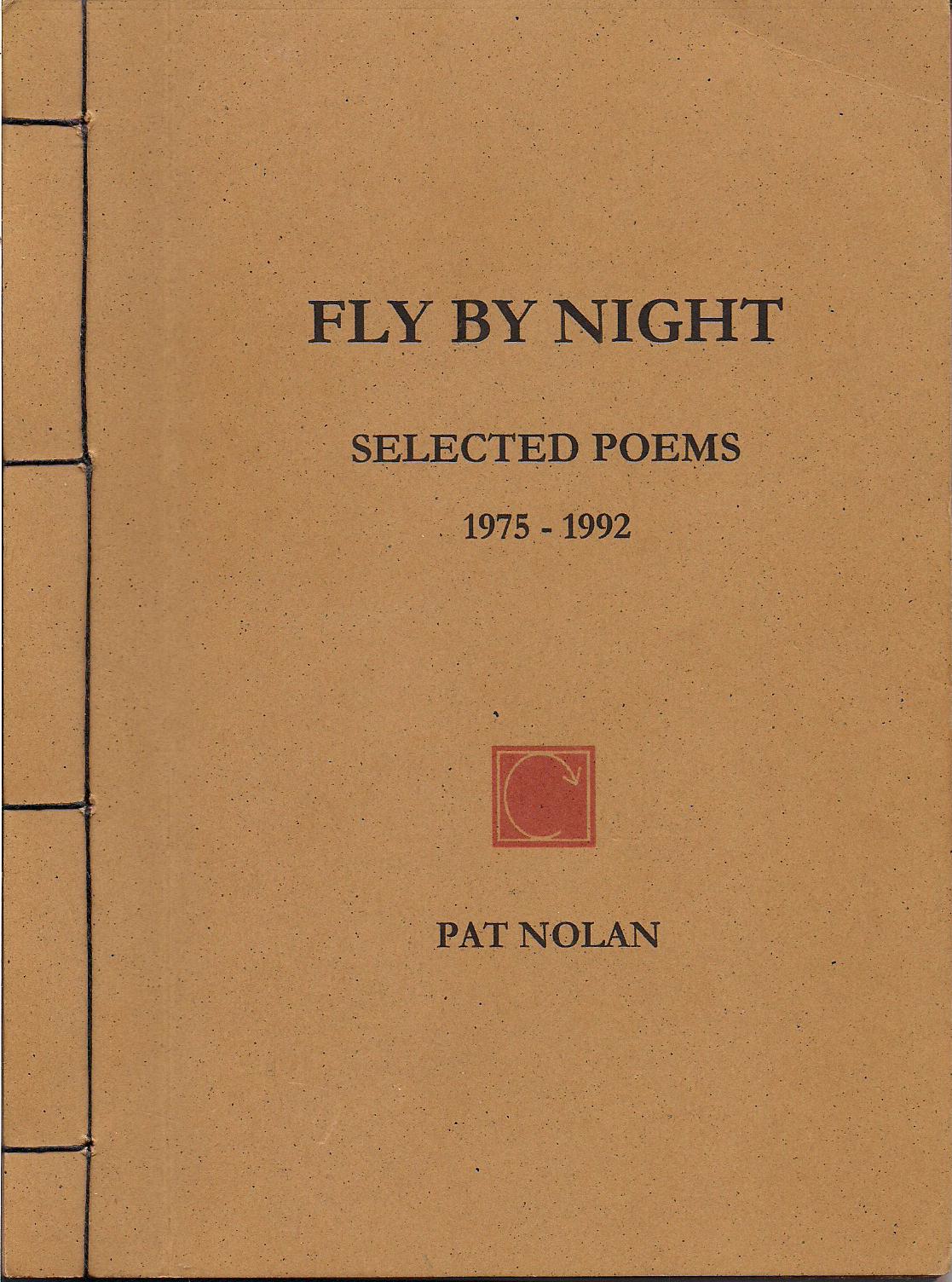
Doris Green Editions originally published Fly By Night as a limited edition specifically for the author’s readings at Naropa University in Boulder, Colorado and at The Poetry Project in New York City in November of 1992.  In 2006, Re:issue Press reprinted the selection of poems in the original edition adding the subheading Selected Poems, 1975 −1992. A few modest editorial changes were also made, and the biographical information updated.  Surplus covers from the original edition were recycled and cut down to fit the current format, from 8×10 to 5×7.  The hand-sewn Japanese style binding and the folded leading edge of the page are unique to the reissued edition.  A review of Fly By Night by Gabriel Ricard was published at the Unlikely Stories blog.  Here then is the full text of that 1992 selection of poems: Fly By Night Selected Poems 1975-1992

Terms, Conditions & Categories

Nualláin − (pronounced Noo-al-ayne) Celtic for the family name, Nolan, meaning noble or famous.  The Irish writer Brian O’Nualláin was also known as Brian O’Nolan, as well as by his most famous pseudonym, Flann O’Brien, author of At Swim-Two-Birds, The Third Policeman and The Dalkey Archives.
House – a business organization of like minded folk, kindred in their interest in the creative, bringing together years of experience in writing, self-publishing, book design, and book selling under one roof, peaked, in the shape of an open book (see logo on the masthead).
Publishers – a business or profession intent on making available literature of a particular genre, be it fiction, poetry or non-fiction, and often entered into more for personal satisfaction than financial gain.  The year 2011 marked the centennial of Brian O’Nualláin’s birth, a fitting beginning for Nualláin House, Publishers, and the publication of ON THE ROAD TO LAS CRUCES, A Novel Account of The Last Day In The Life of A Legendary Western Lawman by Pat Nolan (November, 2011).  Nualláin House, Publishers, will proceed on the assumption that what appeals to the editors might well appeal to other reasonably literate, intellectually curious readers.
Fiction – that which is made up, imaginatively, under the assumptions of possibility more than its probability irrespective of the truth; in short, fanciful lies.  Under the heading of fanciful lies, coming soon: THE LAST RESORT, A Lee Malone Adventure by Pat Nolan (August, 2012).
Poetry – the evil of banality.
Non-Fiction – not fiction.
Whimsy – capricious, eccentric, unpredictable and erratic (see Quirky).
Quirky – an abrupt twist or curve, idiosyncratic (see Whimsy).
Future – that which has the potential of occurring but has yet to occur and which will come to pass through the present however at a point in time yet to be determined.  Or to repurpose Rabelais’ last words, the “vast perhaps.”  Future titles from Nualláin House, Publishers in the crime fiction/ neo-pulp genre include BLACK MASK, A Detective Story, A GOOD LOOKING CORPSE, GONE MISSING, and PH FACTORAlso under the “vast perhaps” heading, selected, collected poems, and limited editions.  All titles will eventually be issued as eBooks.  Blog posts of reviews, interviews and commentary by noted authors will be a feature of the Nualláin House, Publishers site as well.
eBooks – at present, the eBook format taxes the technologically challenged and DIY mentality of Nualláin House, Publishers’ production designer.  Suffice it to say, all titles will eventually be issued as eBooks (see Future).  In the meantime, pdf files of sample chapters and limited edition poetry books will be made available on a regular basis with the compliments of Nualláin House, Publishers (see Future, Sample Chapters, and Limited Editions).
Comments – while this site encourages feedback, the comments feature has been disabled.  If readers wish to register feedback and/or commentary, their responses are more than welcome via email or snail mail (see Contact).
Manuscripts – unsolicited manuscripts are discouraged.
Contact – nuallainhousepublishers@gmail.com or Nualláin House, Publishers  Box 798 Monte Rio, CA 95462
Sample Chapters – sample chapters will be available as posts and as a feature of that title’s page.
Expectations – Great.  However, many years of experience in the literary world (see House) has demonstrated the need for caution in this category.
FacebookNualláin House, Publishers has a Facebook page.  Tell your Facebook friends.
Limited Editions – In the months to come (see Future), Nualláin House, Publishers will make available pdf files of rare and limited editions of poetry books from such presses as Re:Issue Press, On The Fly Press, Last Cookie Press, Editions de Jacob, Bamboo Studio, Empty Head Press, Egret Moon, and Not My Hat Press featuring such titles as Fly By Night, Later, Carbon Data, Intellectual Pretensions, Thin Wings, Untouched By Rain, Ah Bolinas!, Exile In Paradise, and Jacks Or Better.
POS – the Nualláin House, Publishers site remains the primary point of sale.  Titles are available at their advertised price plus $5 shipping & handling.  Institutional, bookstore, and cash discounts are available upon inquiry.  Orders can be placed through email or via the postal address (see Contact).  Make checks or money orders payable to ‘Pat Nolan.’
Copyright – all material on the Nualláin House, Publishers site is copyright © byNualláin House, Publishers or by its specific authors and may not be used or reproduced without the express permission of the copyright holder.


ON THE ROAD TO LAS CRUCES

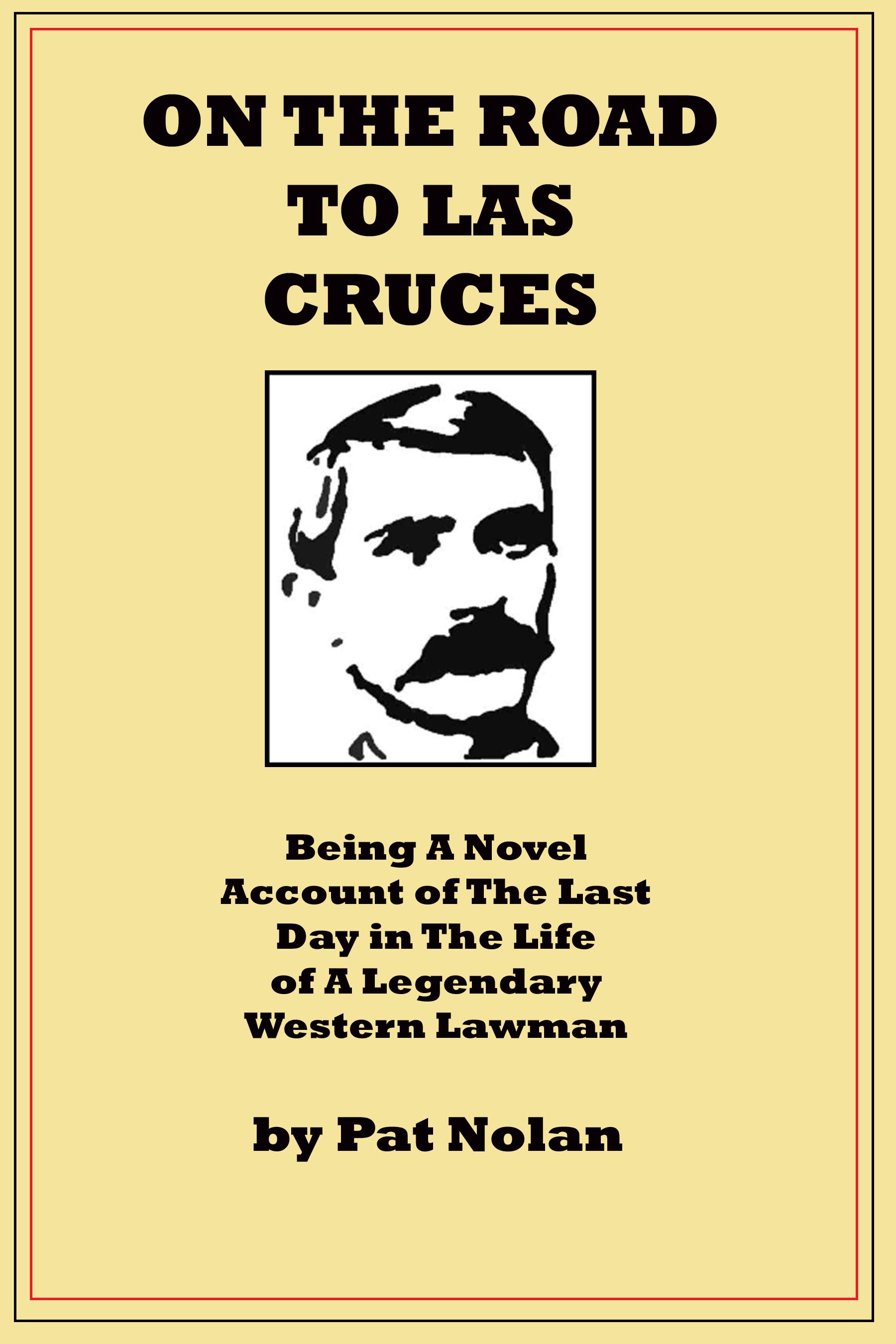
ON THE ROAD TO LAS CRUCES; Being A Novel Account of The Last Day In The Life of A Legendary Western Lawman

by Pat Nolan

Available Now from Nualláin House, Publishers  Box 798 Monte Rio, CA 95462   $16.99 + $5.00 shipping and handling

Pat Nolan’s first published novel, On The Road To Last Cruces; Being A Novel Account of The Last Day In The Life of A Legendary Western Lawman is the story of youthful bravado and an old man’s regret, and as much a dusty tale of buffalo hunts and shoot-outs as a politically driven “whodunit.”

Steeped in the lore of Western radio dramas, cliff-hanging serials, B Oaters, pulp shoot-em ups, and a steady diet of prime-time horse operas, it seems only fitting that Pat Nolan would have distilled his adolescent exposure into a seminal prose of understatement.  The violence in a man’s life, linked by subtle segues, passes as something not particularly unusual.  The consequences are not always evident on a path drawn by blind fate.  Nor is the identity of the Western lawman immediately apparent, as is obviously the author’s intent.  For those familiar with gunfighter sagas, catching the drift will be easy.

Pat Nolan starts right off by telling us what is going to happen, he then lays out the circumstances to what is about to happen, and finally we are privy to the last moment and its irresolution. Along the way, when the tools of law include deadly force, there are bound to be killings.  However there are no showdowns, no heroics, no fancy horsemanship, no arduous adversity, merely pain and regret, bitterness and rancor, and the consequences of another misstep.  It is a tragedy that lends itself to allegory.  It is lament as well as praise for a misunderstood legend of the Southwest.

            On The Road To Las Cruces is a work of fiction tethered loosely to historical fact.  It is the story of the relationship between two men, one garrulous, the other taciturn, the Mutt and Jeff of the old Southwest, and the tradition of storytelling and the authoring of ‘true’ accounts.  What is related on the road to Las Cruces is as much a retelling of some history as it is how such a retelling might come about, and is represented in the manner of a tall tale, the deadpan details of a crime story, melodrama, and a conspiracy to murder.

November, 2011 ~ $16.99 ~ 154 pages ~  978-0-9840310-1-6

Sample Chapters On The Road To Las Cruces Chapter 6  On The Road To Las Cruces Chapter 21   Author’s Note                       

“. . . a real old-fashioned Western.  Page-turner.  There are all sorts of funny sly mixes in the story, good Nolan humor, great repartee. . . .”
– Andrei Codrescu, NPR commentator and author of Whatever Gets You Through The Night.

“Pat Nolan is not only one of our finest living poets. . . but now surprises with a prose paean to the West.  Whatever Pat writes deserves to be read and remembered.”
– Barry Gifford, author of Wild At Heart and Sailor And Lula               

“. . . delight in the narrative style.  [T]ruly vivid. . . .  The book is damn good.”
– Eric Johnson, poet and master printer, Iota Press

“Pat Nolan has added a fresh chapter to our Western lore with this fine, crackling tale.”
– Bart Schneider, author of Nameless Dame and The Man In The Blizzard

“On the Road to Las Cruces takes us on a twilight journey through frontier history.  Nolan’s adroit and stylish prose intertwines death, betrayal, greed and conspiracy as each claims its victims.”
– Keith Abbott, author of Downstream From Trout Fishing In America