
FREE SHIPPING On All Nualláin House Titles


Nualláin House poetry titles are priced at $16 retail
now going for $11 each!!
Get a great deal on some great poetry and
FREE SHIPPING
with purchase of more than one book
see How To Order on the menu bar
Titles available include
So Much, Selected Poems, Volume I Handwritten Typewriter (1969-1989) & II Notebook Keyboard (1990-2010)by Pat Nolan (Nualláin House, 2018, 2019)


The poems selected here are representative of an acquired esthetic sourced outside of the doctrinaire Anglo-American literary tradition. They do not aim at rhetoric nor do they seek to persuade. Their primary intent is to present the fine distinctions of a perceptual identity in a uniquely spontaneous improvisational manner to the ear as well as to the page. “If I have any purpose as a poet it is to remove myself from the musty authority of an entrenched academic conservatism and approach the word in its current state of utter mutability,” Nolan states in the introduction to this two volume selected poems.
“Pat Nolan is one of the poets, Ted Berrigan once said, that you have to always keep an eye on because he can do unexpected startling things that leave you eating his dust.”
— Andrei Codrescu, author of So Recently Rent A World: New and Selected Poems, 1968-2012.
Exile In Paradise by Pat Nolan (Nualláin House, 2017)

The poems of Exile In Paradise are derived from a lifelong appreciation of classical Chinese poetry. Although removed by degrees of separation from the originals in time and language, their impulse remains the same: to call up the perceptual as a song of celebration in sacred engagement with the world.
“Nolan has given Solitude, itself, a voice in this rich lyric of nature. A luminosity of flickering bursts pause and magnify now moments of being alive. His quotidian soaks us with its presence. His lines trace the air.”
—Maureen Owen, author of Erosion’s Pull and Edges of Water
the thousand marvels of every moment, a tanka collection by Pat Nolan (Nualláin House, 2018)

Tanka is the modern name for a short five line poem known throughout the history of Japanese literature as a waka.
“Pat Nolan’s new collection of short poems the thousand marvels of every moment is a late harvest wonder. Distilled in the key of tanka, these poems make sparks out of crumpled paper & ‘fine white rain.’ No better description of the book than from within:
through the particle haze dance
joy and marvel of the mind”
—Eric Johnson, poet, master printer
Poetry For Sale, Haikai no Renga (linked poetry), introduction by Pat Nolan with linked verse by Keith Kumasen Abbott, Sandy Berrigan, Gloria Frym, Steven Lavoie, Joen Eshima Moore, Maureen Owen, Michael Sowl, John Veglia (Nualláin House, 2015)

This collection of linked poetry presents a fascinating excursion in comparative literature by a cross-section of exceptional, widely published American poets. In these pages haikai no renga is synthesized as a brief, highly suggestive, well spoken, maddeningly ambiguous, read-between-the-lines kind of poetry.
“I have seen a number of attempts to do versions of linked poetry in English, and I think yours the truest to the spirit of the Japanese. . . .”
—Earl Miner, author of Japanese Linked Poetry and The Monkey’s Straw Raincoat

2021 marks ten years since Nualláin House, Publishers, began print on demand publishing of “literature as reading entertainment” utilizing readily available digital technology and desktop design options, essentially a case of authors seizing the means of production. Over that time Nualláin House has published two genre novels (crime fiction and western), an anthology of Japanese linked verse, and six selections of poetry. Because technology changes the way one does business, Nualláin House has slowly shifted emphasis away from the production of bound volumes of poetry and fiction to the wider readership access provided by the internet. Digital media in the form of blogs and websites provide an entry for the independent artist and writer to launch shoestring operations that do not demand much more than time, determination, and a little imagination to produce and promote their work. After a decade of slogging up the steep cyber learning curve, Nualláin House, Publishers, a publishing project that focused on printed media, has had to widen its scope of what can be accomplished in the production and promotion of literary arts. To that end, along with a new easier to read WordPress theme, Nualláin House has incorporated two fresh projects available through the site’s menu bar to reflect its expanded emphasis: Affiliated Sites and Bamboo Leaf Studio. As before, synopses and approbation of previously published titles can also be accessed from the menu bar as can contact information and ordering print editions
 The New Black Bart Poetry Society blog, Parole, was launched in 2012 and was originally conceived as a calendar and events reminder for the poetry society. As the successor to Life of Crime, a more scurrilous Society rag from the 80s, Parole continues the focus on poetry, poets, and the poetry scene. It has a worldwide readership which has grown from a couple of hundred readers a month to thousands who now enjoy its unique perspectives on modern poetry.
 Ode To Sunset, A Year In The Life Of American Genius, a fiction by Pat Nolan, was in the works several years before Nualláin House, Publishers, came into being. As work on Ode To Sunset was occurring in parallel, the publishing tools available through the internet offered the opportunity to take a creative leap into the online publishing of the manuscript as a serial novel. At over 600 manuscript pages, the challenge then became one of presentation over a sustained period of time. The novel was posted over two years, 2014-2016, with yearly updates and progress reports since then.
 Joining these two affiliated sites is Dime Pulp, A Serial Fiction Magazine. Nualláin House’s original concept of publishing literature as reading entertainment is being revisited with a new undertaking in the form of a serial fiction magazine posting original crime fiction on a monthly schedule. Dime Pulp has already published its first issues featuring two original novels in serialization as well as short stories with more original genre fiction in the queue.
For the curious wishing to access the aforementioned sites, click on Affiliated Sites here or on the menu bar and follow the links
 Bamboo Leaf Studio is an independent art enterprise by poet Pat Nolan featuring his limited edition handmade books, linoleum prints, and studio based literary ephemera. The studio page provides links to four gallery pages of representative work: Faux Koans, Smoking Poets, Women Poet Postcards, and Handmade Books & Surimono. Click on Bamboo Leaf Studio here or on the menu bar to access the links to the galleries below the brief introduction.
 The events of the past year have presented an opportunity to reassess the expectations for Nualláin House as a publishing arts venture. Although the emphasis on hard copy production is no longer in the forefront, Nualláin House, Publishers, is reviewing its catalog and considering at least one more print on demand edition of creative non-fiction. As well, work is in progress to bring a new serial novel online, in addition to the ones featured in Dime Pulp. Poetry will continue to be a focus but as online chapbooks downloadable in pdf or ebook formats. Bamboo Leaf Studio with new Smoking Poets prints and assorted literary art ephemera continues to be a crucible of creativity in its unique synthesis of art and literature. With the exception of the books, prints, and some ephemera, all of these literary products are available without charge to the interested reader. Many thanks to those who have faithfully followed Nualláin House, Publishers, over the years. There’s always something new on the creative horizon.

Buy one Nualláin House Title at Retail Price & Take 40% off Additional Titles
at the Time of Your Purchase (a saving of over $6 per additional title).
As an added BONUS receive FREE Shipping
with the purchase of two or more Nualláin House titles.
Poetry titles retail for $16 each. See How To Order for details.
 So Much, Selected Poem, 1969-1989
“Descriptions of nature so translucent we can only marvel how he weaves us into them, onward, around that eternal share of misfortune, bitter realization, and expectations gone wrong. This is Nolan’s secret power. He engages us in magical transformation and will not let us look away.”
—Maureen Owen, author of Erosion’s Pull and Edges of Water
 Exile In Paradise
“Reading these poems, I feel like I’m walking down a village lane somewhere in China, beyond the reach of the emperor’s minions, and every door I walk by, someone invites me in for a cup of wine. At this rate, I don’t think I’ll ever make it out of here, and why should I?”
—Bill Porter (Red Pine), translator, author of Finding Them Gone: Visiting China’s Poets from the Past
 Poetry For Sale
“Poetry For Sale is a fantastic collection. Anyone interested in the interaction between Japanese and English poetry needs this book. And anyone interested in renga should definitely get it. It is an immensely pleasing collection: entertaining, surprising, sometimes sharp and witty, sometimes introspective, sometimes descriptive, the renga unfold with great skill and elegance.”
—Jim Wilson, author of Microcosmos, The Art Of The Solo Renga (Sebastopol, 2014)
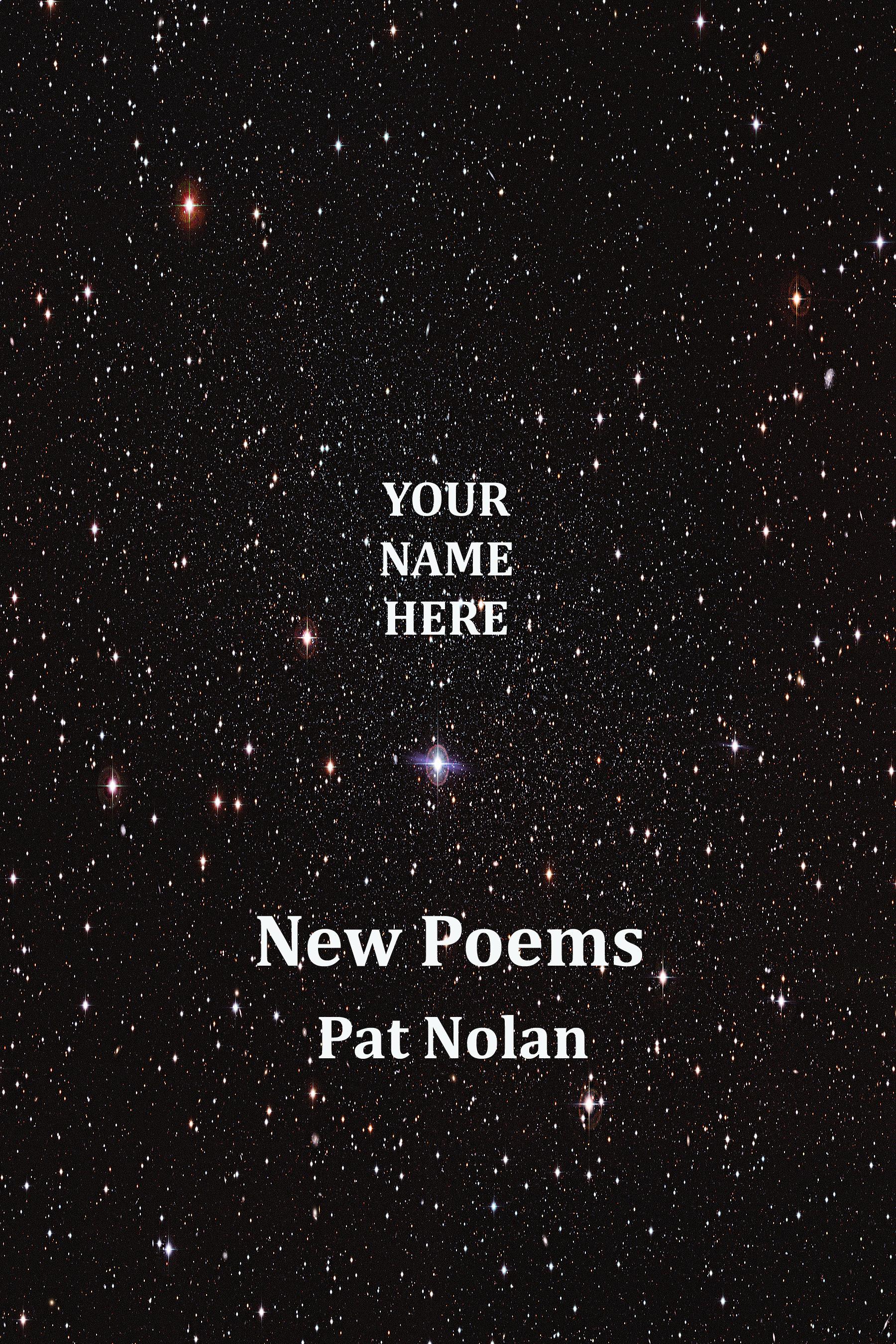 Your Name Here
“The poems glow with insight and wit as they simply monitor the flow of a mind steeped in Chinese poetry, bebop, the Russian River, the beats, the birds, Heraclitus. . . . [Nolan] in his own words, is an alphabet male. And despite the breadth of his learning and thought, is always just talking from right here. It’s a hell of a book.”
—Eric Johnson, poet and master printer at Iota Press
 Hello Life
“Reading Gail King has always been one of my great poetry pleasures. Her inimitable voice narrates the world with humor and tenderness, a world of beauty and occasional sorrow. Her work has healing effects.”
—Andrei Codrescu, NPR commentator and author of So Recently Rent A World
 The Last Resort
“Pat Nolan’s The Last Resort puts his gun in the right hands–a woman’s–with authority and harmful intent. Get ready to hit the deck!”
—Barry Gifford, author of Imagining Paradise and Wild At Heart
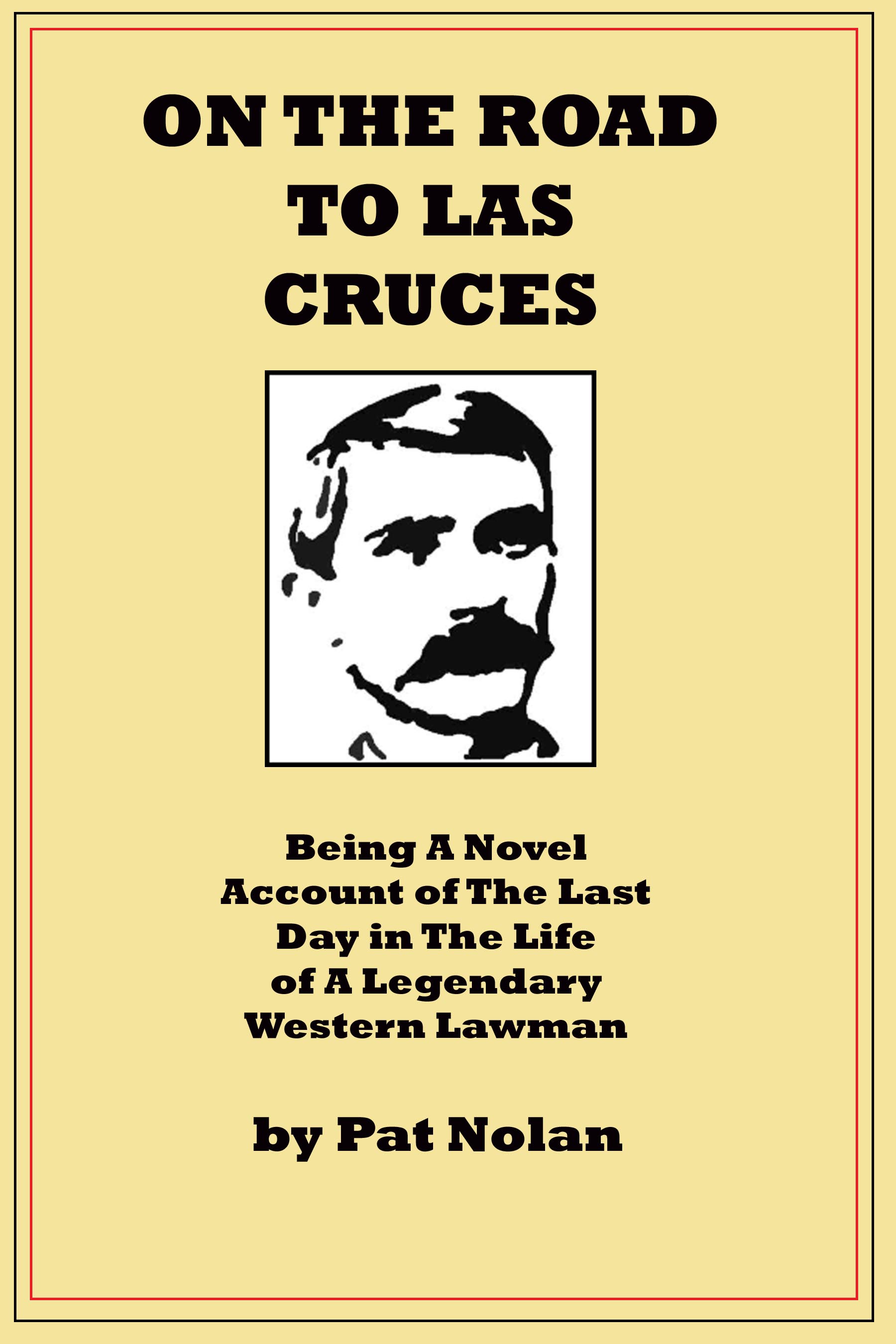
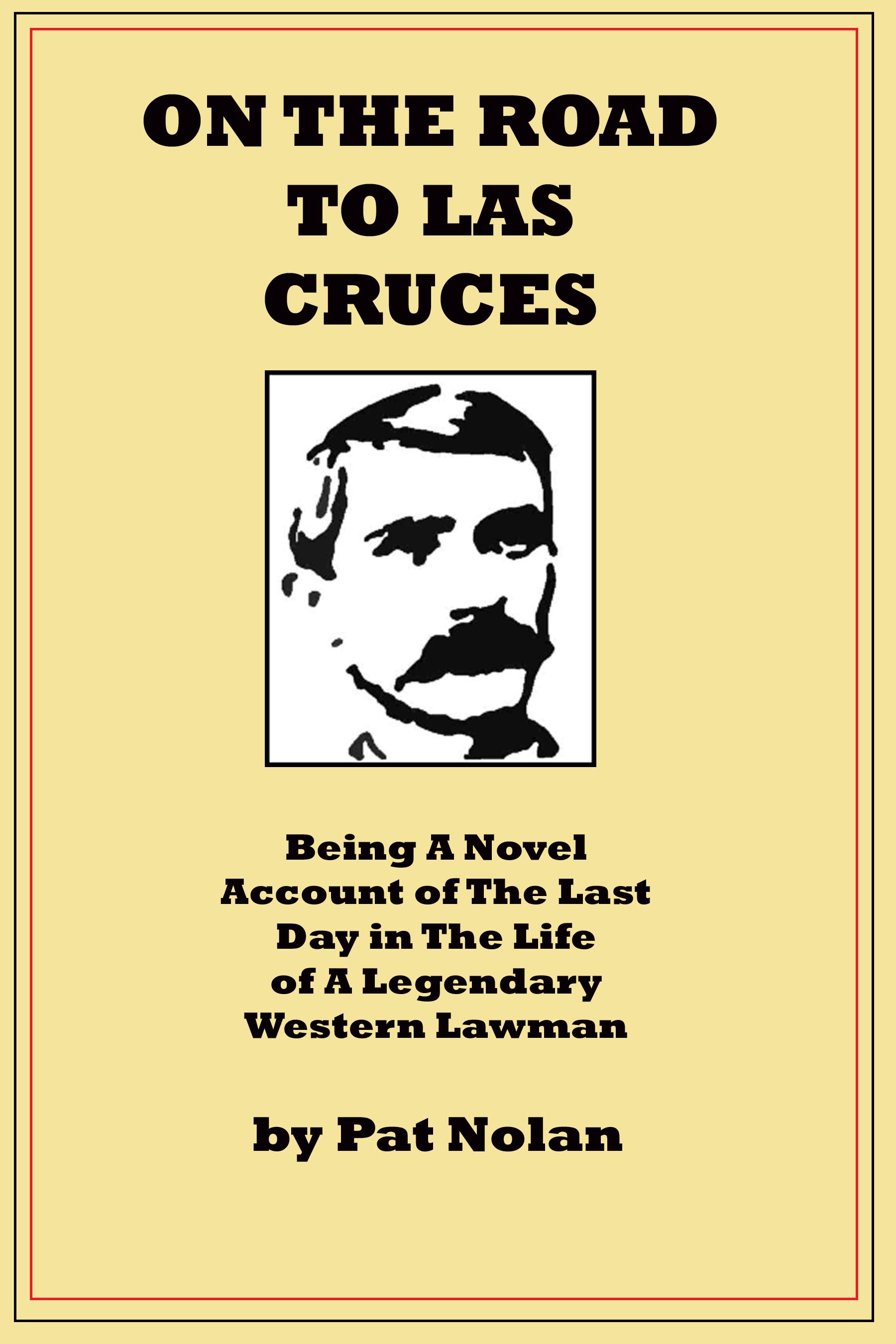 On The Road To Las Cruces
“On the Road to Las Cruces takes us on a twilight journey through frontier history. Nolan’s adroit and stylish prose intertwines death, betrayal, greed and conspiracy as each claims its victims.”
—Keith Abbott, author of Downstream From Trout Fishing In America



 Bamboo Leaf Studio








 accompanied by Pat Nolan’s
Order all five titles and save even more!
Get all five Nualláin House titles for just $60!!
Save over $20!!!
*(free shipping in US only)
Send check or money order
(made payable to ‘Pat Nolan’)
for the listed Sale price to
ON THE ROAD TO LAS CRUCES; Being A Novel Account of The Last Day In The Life of A Legendary Western LawmanPat Nolan’s first published novel, On The Road To Last Cruces; Being A Novel Account of The Last Day In The Life of A Legendary Western Lawman is the story of youthful bravado and an old man’s regret, and as much a dusty tale of buffalo hunts and shoot-outs as a politically driven “whodunit.” November 2011 ~ 154 pages
Pat Nolan has written a fast paced, tongue-in-cheek, pun filled comedy of errors, misunderstandings, and faux intuition in the mode of a 1930’s pulp thriller. Instead of the typical splinter-jawed, broken nosed, tobacco breathed tough guy hero, Nolan upends the stereotype by introducing a gorgeous internationally famous former fashion model whose super power is her beauty.
August 2012~ 212 pages
The poems of Hello Life achieve their freshness in the particularity of experience. The poet surrenders herself to the moment and tenders that subtle cognition as a delighted welcome to life. The ease of her expression in dealing with the everyday communicates an uncommon wisdom. The poems present, through playful understatement and sly humor, the immediacy of spontaneous impressions.
December 2013 ~ 64 pages
The poems in Your Name Here revolve around that quantum axis with seemingly random discontinuities that do not pin down meaning but are left to mean themselves. Nolan’s poetry enacts a sub-vocal monologue that is like the murmur of cosmic background radiation, noticeable only in its cessation or as pauses when the mind registers the sum of discrete moments in an instant. November 2014 ~ 80 pages
Introduction by Pat Nolan
The eleven haikai no renga included in Poetry For Sale were written over period of nearly thirty years by Pat Nolan and his renku collaborators, Keith Kumasen Abbott, Sandy Berrigan, Gloria Frym, Steven Lavoie, Joen Eshima Moore, Maureen Owen, Michael Sowl, and John Veglia. In these pages haikai no renga is synthesized as a brief, highly suggestive, well spoken, maddeningly ambiguous, read-between-the-lines kind of poetry tuned to a common understanding. October 2015 ~ 152 pages
from Nualláin House, Publishers
OCTOBER 2015
Order Now & Get Free Shipping!
(Sorry, Free Shipping Available
To North American Destinations Only)
Offer Good Through October 15, 2015
Poetry For SaleHaikai No Renga (linked poetry)
Introduction by Pat Nolan
Haikai no Renga with
Keith Kumasen Abbott,
Sandy Berrigan, Gloria Frym,
Steven Lavoie, Joen Eshima Moore,
Maureen Owen, Michael Sowl,
and John Veglia.
The eleven haikai no renga included in Poetry For Sale were written over period of nearly thirty years by Pat Nolan and his renku collaborators, Keith Kumasen Abbott, Sandy Berrigan, Gloria Frym, Steven Lavoie, Joen Eshima Moore, Maureen Owen, Michael Sowl, and John Veglia. This collection of linked poetry presents a fascinating excursion in comparative literature by a cross-section of exceptional, widely-published American poets. What these poets bring to the collaborative linking of stanzas is a visceral sense of the poetic that transcends two disparate languages and the gap of centuries. In these pages haikai no renga is synthesized as a brief, highly suggestive, well spoken, maddeningly ambiguous, read-between-the-lines kind of poetry tuned to a common understanding.
October 2015 ~ 152 pages ~ $16 ~ paper ~ ISBN978-0-9840310-4-7
click on the How To Order tab for more information
from HARDLY STRICTLY HAIKAI
—An Introduction—
Haikai no Renga is collaborative poetry of Japanese origin normally written by two or more poets linking stanzas of 17 syllables and 14 syllables according to specific rules governing the relationship between stanzas. Haikai collaboration can be as complex as chess, as multi-dimensional as go, and as fast-paced and entertaining as dominoes. It is as much about the interaction of the poets as it is about what gets written. The forward progress of its improvisation is akin to that of a tight jazz combo. Haikai composition has also been compared to montage in experimental film where the discontinuity of images and vectors achieves an integral non-narrative expression.
Haikai no renga is known variously as renga, haikai, renku, and linked poetry. Generally the term renga is applied to an older, more traditional style of linking poetry practiced by the aristocracy and the upper echelon of medieval Japanese society. Haikai no renga means “non-standard renga” though it has often been translated as “mongrel” or “dog renga” which places it in the literary hierarchy as common entertainment.
In the introduction to her seminal study of Matsuo Basho’s haikai no renga, Monkey’s Raincoat (Grossinger/Mushinsha, 1973), Dr. Maeda Cana offers a further explication of the word haikai. “The main characteristics of the haikai are partly discernible in the kanji or Chinese characters which make up the words haikai and renku: hai denotes fun, play, humor, and also actor or actress, and kai friendly exchange of words; ren represents a number of carriages passing along a road one after another and has the meaning of continuing to completion while ku is expressive of the rhythmic changes in speech and denotes end or stop.”
Renku is a literary game of high seriousness valuing cooperation and rewarding intelligence as well as intuition. A poet’s erudition and sense of language are called upon to clear paths and build bridges that will meander through the landscape of a literary garden. Its cooperative result, a balance of unpredictable language gestures as insubstantial as smoke but possessed of a palpable humanity, is what is important. The echo of the response, its relationship to the previous stanza, and how it extends its meaning, poignantly or allusively, is the esthetic ground for this kind of poetry. The linking process, in renga, and in haikai, allows a sequence whose subtle oscillation of playfulness and gravity walk the tightrope of language’s built-in ambiguities.
“Generally speaking, haikai is steeped in the wit and banter” as Dr. Cana explains, and “it has a brilliance that shocks. Such brilliance is continual and amazes. . .at every turn.” Poets are under pressure to produce the unpredictable so that the possibilities of cleverness are continually exploited at a tempo that is swift and witty. The haikai poets of old delighted in word play, literary allusions, double entendres as well as displays of authentic sensibility. The completed renku is as much a certificate of cooperation as it is a multi-page poem and a sequence of short poems. Its literary value is in its effervescent spontaneity and transitory nature, a quality much appreciated by the Japanese.

Haikai no Renga is collaborative poetry of Japanese origin normally written by two or more poets linking stanzas of 17 syllables and 14 syllables according to specific rules governing the relationship between stanzas. Haikai collaboration can be as complex as chess, as multi-dimensional as go, and as fast-paced and entertaining as dominoes. It is as much about the interaction of the poets as it is about what gets written. The forward progress of its improvisation is akin to that of a tight jazz combo. Haikai composition has also been compared to montage in experimental film where the discontinuity of images and vectors achieves an integral non-narrative expression.
Haikai no Renga also known as renku is a literary game of high seriousness valuing cooperation and rewarding intelligence as well as intuition. A poet’s erudition and sense of language are called upon to clear paths and build bridges that will meander through the landscape of a literary garden. Its cooperative result, a balance of unpredictable language gestures as insubstantial as smoke but possessed of a palpable humanity, is what is important. The echo of the response, its relationship to previous stanza, and how it extends its meaning, poignantly or allusively, is the esthetic ground for this kind of poetry. The linking process, in renga, and in haikai, allows a sequence whose subtle oscillation of playfulness and gravity walk the tightrope of language’s built-in ambiguities.
The eleven haikai no renga included in Poetry For Sale were written over period of nearly thirty years by Pat Nolan and his renku collaborators, Keith Kumasen Abbott, Sandy Berrigan, Gloria Frym, Steven Lavoie, Joen Eshima Moore, Maureen Owen, Michael Sowl, and John Veglia. This collection of linked poetry presents a fascinating excursion in comparative literature by a cross-section of exceptional, widely-published American poets. What these poets bring to the collaborative linking of stanzas is a visceral sense of the poetic that transcends two disparate languages and the gap of centuries. In these pages haikai no renga is synthesized as a brief, highly suggestive, well spoken, maddeningly ambiguous, read-between-the-lines kind of poetry tuned to a common understanding.
October 2015 ~ 152 pages ~ $16 ~ paper ~ ISBN978-0-9840310-4-7
go to How To Order page for more information
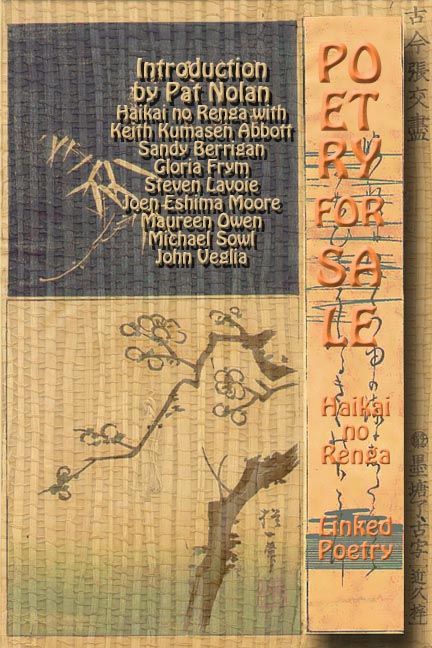
Haikai no Renga
(Linked Poetry)
Introduction by
Pat Nolan
Haikai no Renga with
Keith Kumasen Abbott,
Sandy Berrigan, Gloria Frym,
Steven Lavoie, Joen Eshima Moore,
Maureen Owen, Michael Sowl,
and John Veglia
From HARDLY STRICTLY HAIKAI
—An Introduction—
Haikai no Renga is collaborative poetry of Japanese origin normally written by two or more poets linking stanzas of 17 syllables and 14 syllables according to specific rules governing the relationship between stanzas. Haikai collaboration can be as complex as chess, as multi-dimensional as go, and as fast-paced and entertaining as dominoes. It is as much about the interaction of the poets as it is about what gets written. The forward progress of its improvisation is akin to that of a tight jazz combo. Haikai composition has also been compared to montage in experimental film where the discontinuity of images and vectors achieves an integral non-narrative expression.
Haikai no renga is known variously as renga, haikai, renku, and linked poetry. Generally the term renga is applied to an older, more traditional style of linking poetry practiced by the aristocracy and the upper echelon of medieval Japanese society. Haikai no renga means “non-standard renga” though it has often been translated as “mongrel” or “dog renga” which places it in the literary hierarchy as common entertainment.
Renku is a literary game of high seriousness valuing cooperation and rewarding intelligence as well as intuition. A poet’s erudition and sense of language are called upon to clear paths and build bridges that will meander through the landscape of a literary garden. Its cooperative result, a balance of unpredictable language gestures as insubstantial as smoke but possessed of a palpable humanity, is what is important. The echo of the response, its relationship to previous stanza, and how it extends its meaning, poignantly or allusively, is the esthetic ground for this kind of poetry. The linking process, in renga, and in haikai, allows a sequence whose subtle oscillation of playfulness and gravity walk the tightrope of language’s built-in ambiguities.
The eleven haikai no renga included in Poetry For Sale were written over period of nearly thirty years by Pat Nolan and his renku collaborators, Keith Kumasen Abbott, Sandy Berrigan, Gloria Frym, Steven Lavoie, Joen Eshima Moore, Maureen Owen, Michael Sowl, and John Veglia. This collection of linked poetry presents a fascinating excursion in comparative literature by a cross-section of exceptional, widely-published American poets. What these poets bring to the collaborative linking of stanzas is a visceral sense of the poetic that transcends two disparate languages and the gap of centuries. In these pages haikai no renga is synthesized as a brief, highly suggestive, well spoken, maddeningly ambiguous, read-between-the-lines kind of poetry tuned to a common understanding.
Pre-orders now being accepted.
Place your dibs at
nuallainhousepublishers.gmail.com
haikai no renga by Keith Kumasen Abbott, Pat Nolan, Maureen Owen & Michael Sowl
 All Ears, a haikai no renga or linked verse, was the first of the collaborations between Maureen Owen, Keith Kumasen Abbott, Michael Sowl, and Pat Nolan to be made into a limited edition handmade book and was published by Empty Head Press in 2004. Subsequently, Random Rocks and Poetry For Sale, both haikai no renga, were issued as limited edition handmade books(see Nualláin House archives for July 2013 and October 2012). All Ears was also included in the anthology Saints of Hysteria, A Half Century of Collaborative American Poetry (Soft Skull Press, 2007).
All Ears was composed through the mail over a period of a year and a half beginning in early 1992. Once the 36 stanzas (kasen) of the haikai-no-renga were completed, each poet was asked to comment on the process in general, and on their own stanzas and those of their collaborators. The arrangement of stanza follows the standard haikai form of 8 stanzas on the first sheet and 8 stanzas on the back sheet with the remaining 20 stanzas taking up the central text. Following the haikai no renga and the commentary by the poets is the sequence showing the stanza assignment as well as which poets had the moon and flower stanzas.
All Ears was bound using repurposed “sticks & strings” wallpaper sheets from a wallpaper sample book as cover stock and backed with Japanese silkscreen endpapers. Each cover was unique in itself. The pages were folded vertically with a folded leading edge as is common in Japanese books. Each book was hand sewn using a Japanese side stitch style known “tortoiseshell.” The dimensions are 4.25×10 inches (10.5×16.5 cm). Only a limited number of All Ears were produced and it is out of print.
For more on the intriguing subject of Japanese Linked Verse, see Earl Miner’s Japanese Linked Poetry (Princeton, 1979), Hiroaki Sato’s One Hundred Frogs (Weatherhill, 1983), and Haruo Shirane’s Traces Of Dreams (Stanford, 1998).
To view a PDF facsimile of All Ears, click on ALL EARS 2004
 nuallainhousepublishers.com